
Materials ·
HDPE Melbourne: Sheet Types, Uses and How to Order in Bulk
Looking for HDPE in Melbourne? Compare sheet grades, colours, finishes and uses, then learn how to order factory-direct HDPE sheet in bulk from Plastics Direct.
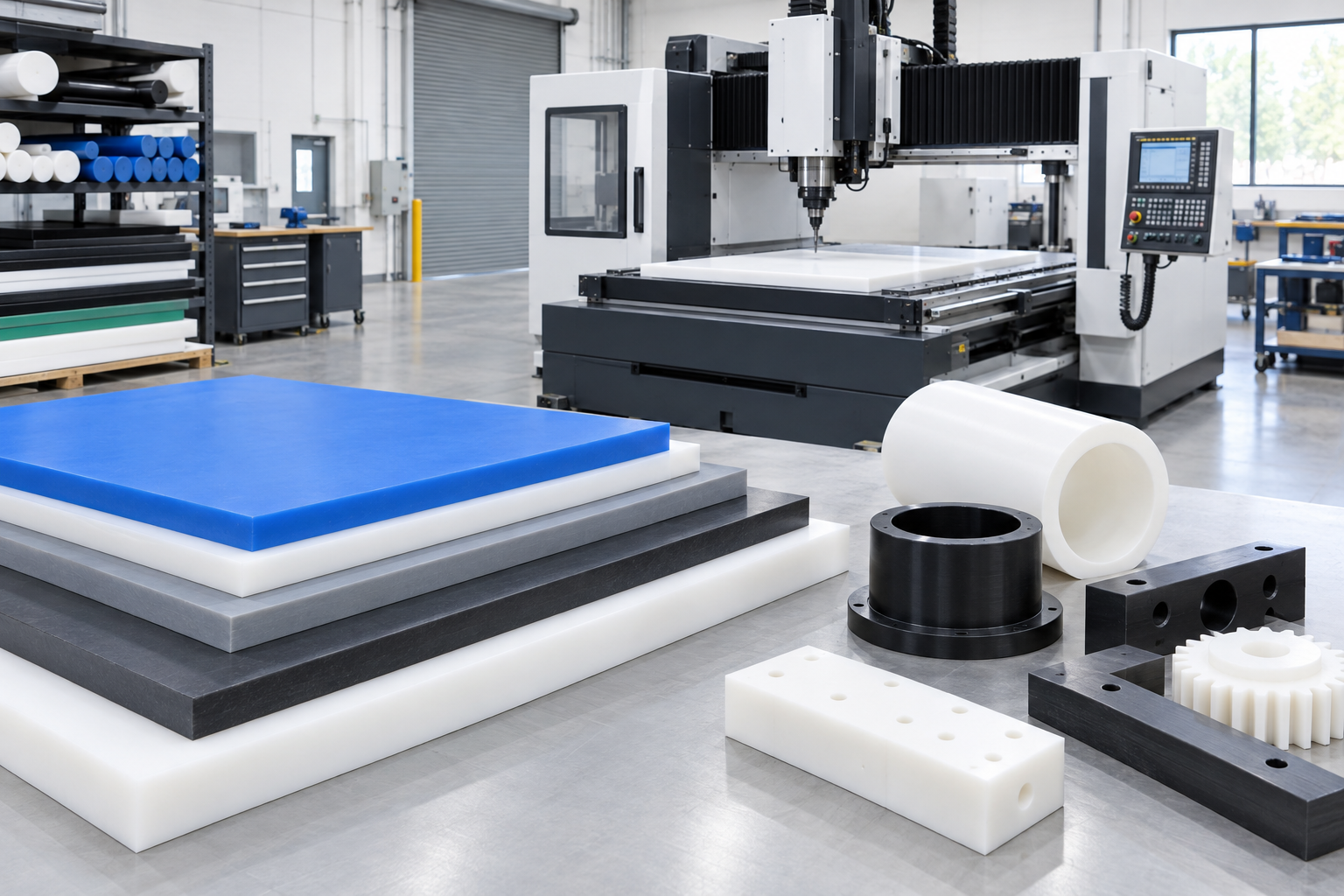
If you are searching for HDPE Melbourne, chances are you need a tough, chemical-resistant sheet that will not absorb water, crack in the cold or corrode like metal. High-density polyethylene ticks those boxes, and it is one of the most widely specified engineering plastics in Victorian workshops, food plants, marine yards and construction sites. This guide covers what HDPE is, the options you can choose from, where it works best and how to order it in volume.
What HDPE Sheet Actually Is
HDPE is a semi-crystalline thermoplastic. It is lightweight (it is less dense than water and floats), tough under impact, and highly resistant to acids, alkalis and many solvents. Moisture absorption is close to zero, which is why it is a go-to for wet environments. It also stays impact-resistant at low temperatures, although it softens as temperatures climb, so it is not a high-heat material.
The trade-offs are worth knowing up front. HDPE has a low-friction, waxy surface, so it will not bond with normal glues. It also expands and contracts with temperature more than metals, and it is not as rigid as acrylic or polycarbonate. Design for these traits and it performs reliably for years.
HDPE Options: Colour, Finish, Thickness and Grade
Before you request a quote, it helps to settle four variables. Getting these right avoids rework and keeps the order simple.
Colour
Natural, white and black are the most common, with coloured sheet used for colour-coding in food preparation and for playground and signage work. Black sheet typically contains UV stabilisers and is the usual pick for outdoor exposure. Confirm colour availability and any minimums when you enquire.
Surface finish
Sheet may be supplied with a smooth face, a textured face or both. A textured surface is popular for non-slip and playground applications and hides scuffs on high-traffic parts, while a smooth face suits cutting boards and clean-down surfaces.
Thickness and sheet size
Thickness depends on the load and span. Thin sheet suits linings and covers, while thicker sheet is used for structural parts, cutting blocks and wear components. Because HDPE flexes more than rigid plastics, err towards thicker material where it must span a gap unsupported. Give us your finished part dimensions and we can advise on the most efficient sheet size to minimise offcuts.
Grade and compliance
Virgin material is the standard for food contact, water and any application where consistency matters. If you need food-safe documentation, tell us at the enquiry stage so the right grade and paperwork are confirmed before you commit.
Where HDPE Is Used Around Melbourne
Melbourne's mix of manufacturing, food production, construction and bayside marine work means HDPE turns up in a lot of places:
Food processing and hospitality: cutting boards, prep surfaces and colour-coded components that resist bacteria-harbouring scratches better than timber.
Marine and outdoor: dock fittings, boat components, fender facings and outdoor furniture, thanks to HDPE's water and UV performance (in stabilised grades).
Industrial: chemical tank linings, machine guards, wear strips, conveyor components and fabricated tanks.
Construction and landscaping: damp-proof barriers, formwork facings, toilet partitions and playground panels.
If the job involves heavy sliding abrasion, such as chute liners or bearing surfaces, it is worth comparing HDPE against UHMWPE sheets in Melbourne. For rigid, glued assemblies or printed graphics, ABS sheets in Melbourne are often a better fit.
Fabricating HDPE: Cutting, Welding and Routing
HDPE cuts cleanly with standard woodworking tools: carbide-tipped saw blades, routers and drills all work. Use sharp tooling, keep feeds steady and clear swarf to avoid heat build-up and melting. Joining is done by hot-air or extrusion plastic welding, or with mechanical fasteners, since adhesives will not hold. Allow for thermal movement by using slotted holes in long runs.
If you need repeatable parts rather than flat sheet, our offshore CNC routing service can cut HDPE to your drawings, which is a practical option for batches of identical components.
How to Order HDPE in Melbourne From Plastics Direct
Plastics Direct ships HDPE sheet direct from vetted overseas factories to trade and bulk buyers, with no middlemen adding margin along the way. You can see the range on our HDPE sheets in Melbourne page. To get an accurate quote, have these details ready:
Thickness, sheet size and quantity (or finished part dimensions if you want it cut)
Colour and surface finish (smooth, textured, natural, black and so on)
Application and environment including UV exposure, food contact, chemicals or loads
Delivery location and timing so freight can be planned around your project
Factory-direct buying suits volume work best, so it pays to consolidate your needs into fewer, larger orders. If you are sourcing across several materials or sites, our overview of plastic suppliers in Australia explains how we work. Interstate or New Zealand buyers can also check the pages for HDPE in Adelaide and HDPE in Auckland.
Choosing HDPE With Confidence
HDPE is the practical answer when you need a tough, wet-proof, chemical-resistant sheet that is easy to cut and weld. Match the colour, finish and thickness to the job, plan your joining method early, and consider UHMWPE only where extreme wear is the real problem. Do that, and your HDPE Melbourne order will be right the first time.
Ready to order HDPE for your Melbourne project? Contact Plastics Direct with your sizes, quantities and application for factory-direct pricing, with no middlemen.
Frequently asked questions
What is HDPE sheet used for?
HDPE (high-density polyethylene) sheet is used for chopping boards, cutting surfaces, marine and outdoor fittings, tanks and linings, playground components, wear strips, fabricated guards and food-contact surfaces. It is chosen for its chemical resistance, impact strength and very low moisture absorption.
Is HDPE the same as UHMWPE?
No. Both are polyethylenes, but UHMWPE has a much higher molecular weight, which gives it better abrasion resistance and impact performance in wear applications. HDPE is easier to weld and fabricate and is usually the more economical choice for general-purpose jobs.
Can HDPE sheet be CNC routed?
Yes. HDPE machines well with sharp single-flute tooling and correct feeds and speeds. Plastics Direct offers offshore CNC routing, so parts can be supplied cut to your drawings rather than as full sheets.
Can I glue HDPE?
Not with standard solvent cements or most adhesives, because HDPE has a low surface energy. It is normally joined by plastic welding or mechanical fixings, so plan your fabrication method before you specify the material.
How do I order HDPE sheet from Plastics Direct for delivery to Melbourne?
Send your required thickness, sheet size, colour, finish, quantity and application through the contact page. Plastics Direct will confirm specifications and provide factory-direct pricing for delivery to Melbourne and the rest of Australia.