
Materials ·
Plastic Board: Types, Uses and How to Order in Bulk
Plastic board explained: HDPE, PVC, ABS, acrylic, polycarbonate and UHMWPE compared, where each is used, and how to order factory-direct in Australia and NZ.
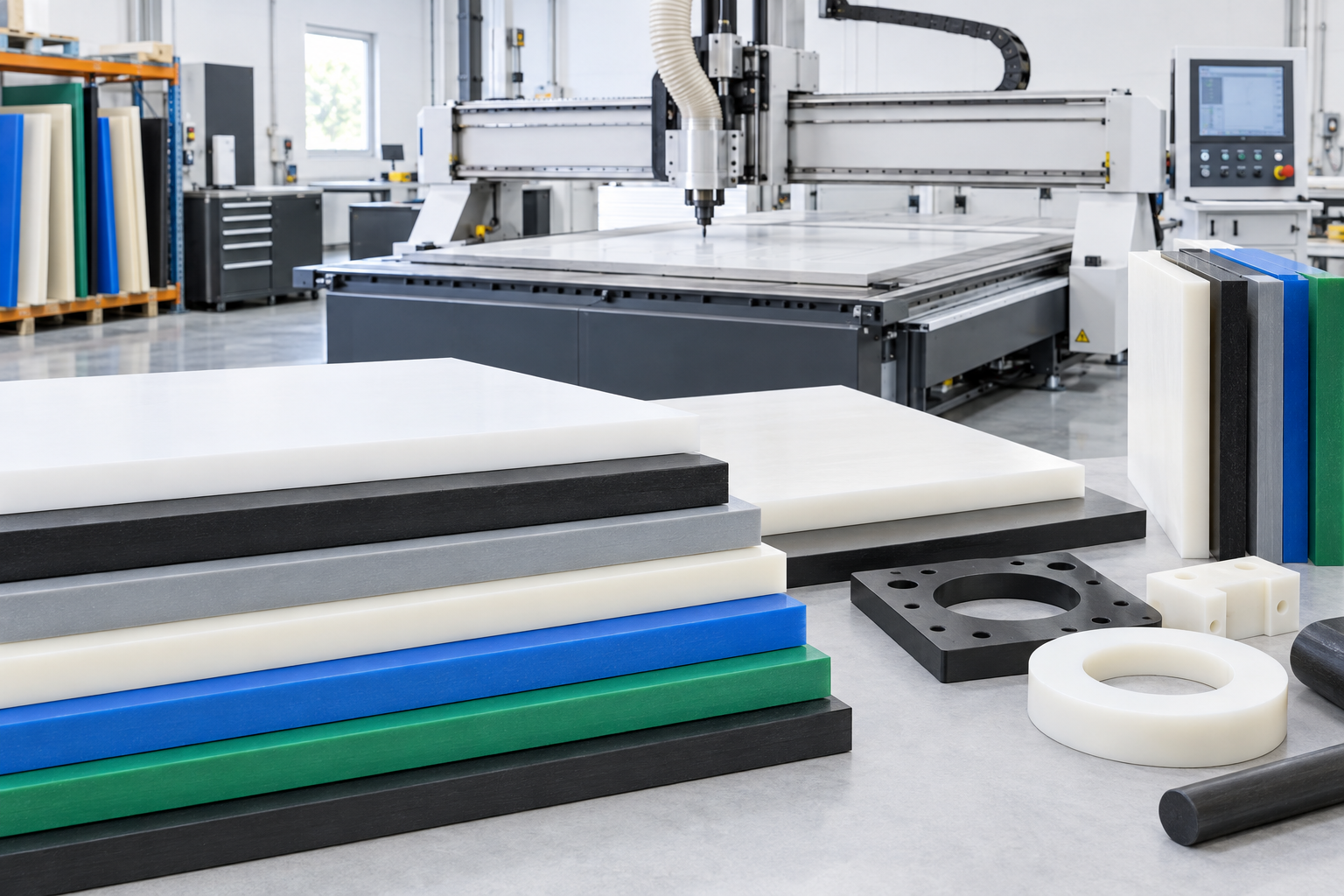
Search for "plastic board" and you will get everything from kitchen chopping boards to corflute signs. In the trade, the term usually means one thing: rigid, flat plastic sheet that gets cut, routed, welded, bonded or machined into something useful. This guide covers what plastic board is, the main material options, where each is used and how to order it in volume. You can also browse the full range on our plastic products and materials page.
What does "plastic board" actually mean?
Plastic board is a loose, everyday term. There is no single "plastic board" material. The name covers any flat, rigid plastic panel, and the polymer behind it decides almost everything: impact strength, chemical resistance, clarity, wear life, how easily it machines and what it costs.
Buyers often search "plastic board" when they know the job but not the material. A workshop wants a bench-top that will not swell. A sign maker wants a smooth face for printing. A food processor wants something that will not harbour bacteria. The first step is matching the job to the polymer, and the sections below do that.
The main types of plastic board
HDPE: the all-rounder
High-density polyethylene is tough, resists moisture and many chemicals, and is easy to machine and weld. It is the usual choice for cutting boards, marine fittings, tanks, playground components and general fabrication. If you are in New Zealand, see our HDPE sheets in New Zealand page.
PVC: rigid, durable and easy to fabricate
PVC board comes in solid and foamed forms. It resists many chemicals, holds its shape and bonds well with solvent cement. It is widely used for signage, wall cladding, display work, tank linings and industrial fabrication. Our PVC sheets for Australia page covers the options.
ABS: impact-resistant and easy to form
ABS is rigid with good impact strength and a clean surface finish. It thermoforms well, which makes it popular for enclosures, vehicle trim, housings, prototypes and tooling. See ABS sheets in Australia for the range we supply.
Acrylic and polycarbonate: the clear options
When you need transparency, the choice is usually acrylic or polycarbonate. Acrylic offers excellent optical clarity and a polished finish, and it laser cuts and polishes well. Polycarbonate is far more impact resistant, which is why it is used for machine guards, safety glazing and protective screens. The trade-off is that acrylic is more brittle and polycarbonate is easier to scratch, so match the choice to the risk the part will face.
UHMWPE, nylon and PTFE: engineering boards
These are the boards for wear, friction and heat. UHMWPE handles abrasion and low-friction duty such as chute liners, wear strips and conveyor components. Nylon is a strong engineering plastic for bearings, gears and wear parts. PTFE has very low friction and wide chemical resistance, and it suits seals, gaskets and non-stick surfaces. Read more on our UHMWPE sheets in Australia page.
Where plastic board is used
Plastic board turns up across nearly every trade. Common applications include:
Signage and displays: PVC, acrylic and ABS for printed panels, fabricated letters and point-of-sale builds.
Food and hospitality: HDPE for cutting boards and prep surfaces. If you need food-contact material, confirm the certification of the specific grade with your supplier.
Industrial and mining: UHMWPE and nylon for liners, wear plates, guides and rollers.
Marine and outdoor: HDPE for boat components, docks and fittings, where water absorption and corrosion are the problem.
Safety and protection: Polycarbonate for machine guards, shields and glazing.
Chemical and processing: PVC and PTFE for tanks, linings, gaskets and fittings.
How to choose the right plastic board
Work through these questions before you request a quote:
What is it exposed to? Sunlight, water, chemicals, heat and abrasion each rule out some materials.
Does it need to be clear? If so, you are choosing between acrylic and polycarbonate. Otherwise a wider range opens up.
How will it be fabricated? Bonding, welding, thermoforming, routing and laser cutting all suit different polymers. HDPE and UHMWPE, for example, are hard to glue, while PVC and acrylic bond readily.
What thickness, size and colour do you need? Have these ready, along with your annual or per-job volume. They shape the quote more than anything else.
If you are unsure, tell us the application and we will point you to a suitable material rather than guess from a name.
How to order plastic board from Plastics Direct
Plastics Direct ships plastic sheet direct from vetted overseas factories to trade and bulk buyers across Australia and New Zealand, with no middlemen in between. That suits fabricators, sign makers, manufacturers and resellers who order in volume and want to deal with the source.
To order, send us the material, thickness, sheet size, colour and quantity, plus the delivery location. If you need finished parts rather than raw sheet, our offshore CNC routing service can machine components to your drawings. We will confirm what is available and quote the job. For specifics such as pricing, lead times and stock, please ask us directly so you get current figures for your order.
Get the right board the first time
"Plastic board" is the starting point, not the specification. Pick the polymer that fits the environment and the fabrication method, confirm the thickness and size, and order from a supplier that can back the material with factory-direct sourcing. Done in that order, you avoid the costly mistake of machining or installing a board that fails in service.
Need plastic board in volume? Contact Plastics Direct with your material, size and quantity and we will come back with factory-direct pricing for Australia and New Zealand.
Frequently asked questions
What is plastic board made from?
"Plastic board" is a general term, not a single material. It usually refers to rigid plastic sheet made from polymers such as HDPE, PVC, ABS, acrylic, polycarbonate, UHMWPE, nylon or PTFE. Each one behaves differently, so the right board depends on the job.
What is the difference between plastic board and plastic sheet?
In most trade conversations there is no real difference. "Board" tends to be used for thicker, stiffer, general-purpose material, while "sheet" covers everything from thin film-like gauges to heavy slabs. At Plastics Direct, both are supplied as flat rigid sheet.
Which plastic board is best for outdoor use?
It depends on the application. Acrylic and polycarbonate are common for glazing and signage, and UV-stabilised grades of HDPE and PVC are used for outdoor fabrication. Always confirm the UV stability of the specific grade with your supplier before you order.
Can plastic board be cut to size or CNC machined?
Yes. Most plastic boards can be sawn, routed, drilled and CNC machined, though tooling and settings vary by material. Plastics Direct also offers offshore CNC routing and parts manufacturing if you would rather receive finished components.
How do I get a quote for plastic board in bulk?
Send your material, thickness, sheet size, colour and quantity through the contact page. Include any finishing needs such as cut-to-size or routed parts so the quote reflects the full job.