
Materials ·
Polycarbonate Roofing Sydney CBD: Options and How to Order
Polycarbonate roofing for Sydney CBD projects: solid vs multiwall sheet, tints, UV protection, fixing tips and how to order factory-direct in bulk to Sydney.
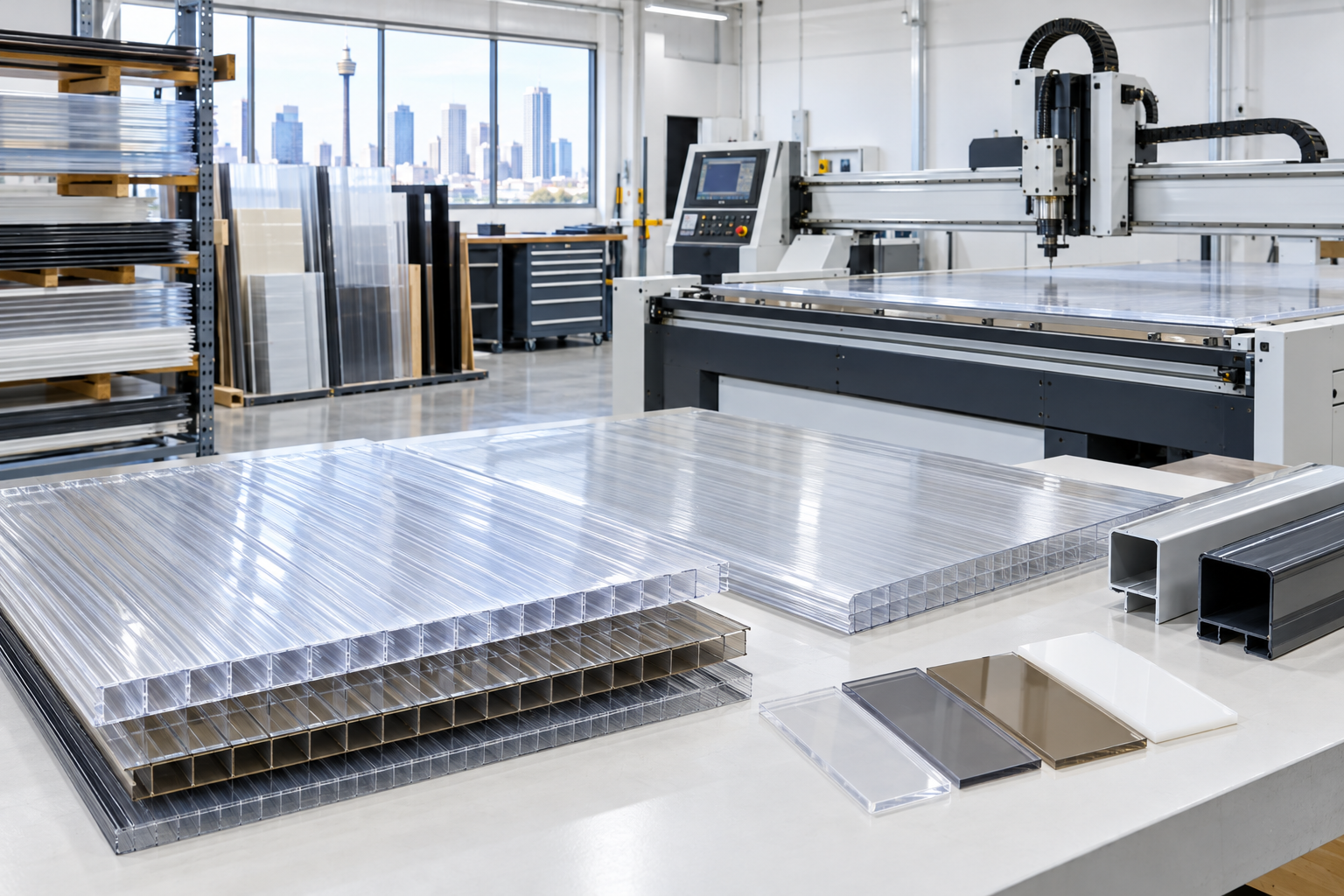
Roofing work in the Sydney CBD is rarely straightforward. Sites are tight, access is restricted, and weight on existing structures matters. That is a big part of why polycarbonate is so often specified for awnings, laneway canopies, rooftop terraces and skylights. It is light enough to handle without heavy equipment, tough enough to survive hail and foot traffic during installation, and it lets daylight through. This guide covers what to look at when sourcing polycarbonate roofing for Sydney CBD projects, the sheet options, and how to order in volume.
Why polycarbonate suits CBD roofing work
Polycarbonate is a transparent engineering thermoplastic with very high impact strength, far beyond acrylic or glass at comparable thickness. For roofing that means fewer cracked sheets from falling debris, tools dropped during maintenance, or the odd storm. It is also much lighter than glass, which reduces the load on supporting frames and can simplify structural design on older buildings.
It cuts, drills and cold-bends with standard fabrication tools, so a small crew can often shape sheets on site. If you are weighing it against acrylic for a covered area, our acrylic sheets in Sydney are better for clarity and polish, but polycarbonate is the safer choice wherever impact resistance matters overhead.
Polycarbonate roofing options: profile, tint and UV protection
Solid sheet
Solid polycarbonate is a single homogeneous layer. It gives the clearest view and the cleanest look, which is why it is popular for skylights, glazed canopies, balcony covers and architectural features. It can be flat or cold-curved over a frame. It is heavier than multiwall at the same overall thickness, so frame spacing and thickness need to match the span.
Multiwall sheet
Twin-wall and triple-wall sheets have internal ribs and air chambers. They are stiff for their weight, span further between supports and offer better insulation than solid sheet. The trade-off is that you get diffused light rather than a clear view. They suit covered walkways, pergolas, plant-room roofs and rooftop enclosures where glare reduction and thermal comfort matter more than transparency. Multiwall sheet needs end sealing and the right closure profiles so dust and moisture stay out of the flutes.
Tints and heat control
Sydney summers are harsh on exposed roofing, and CBD buildings often reflect heat between facades. Clear, opal (white diffused), bronze and grey tints are all common options, and darker or opal tints reduce glare and solar gain. Heat-reflective grades also exist. Be clear about which you need when you request a quote, since tint and light transmission affect both comfort and appearance.
UV-protected face
For any outdoor use, specify sheet with a UV-protective layer. It is applied to one or both faces, and where it is on one side only, that side must face the sun. Installing it upside down is one of the most common causes of premature yellowing and embrittlement. Protective film is usually marked to show the correct orientation, so leave it on until the sheet is fixed.
Where polycarbonate roofing is used in the Sydney CBD
The typical applications in dense inner-city areas include:
Shopfront awnings and entry canopies that need light without heavy framing.
Rooftop terrace and bar covers, where weight and wind exposure drive material choice.
Laneway and courtyard roofing that brings daylight into otherwise dark spaces.
Skylights, light wells and atrium infills in commercial refits.
Covered walkways, bike storage and plant enclosures.
Builders, roofing contractors, shopfitters and signage fabricators all use the same raw material. If your project involves a branded canopy or illuminated panel as well, our custom signs and lightboxes service can sit alongside the sheet supply.
Compliance and installation basics
Polycarbonate is a combustible plastic, and CBD buildings are subject to strict requirements. Before specifying sheet, check the NCC provisions for your building class, any fire hazard property requirements, wind loads for the height and exposure of the site, and any heritage or council conditions. Your certifier or structural engineer should sign off on span, thickness and fixing method. We supply the sheet. We do not replace that sign-off.
On the installation side, a few habits prevent most failures:
Allow for thermal expansion. Polycarbonate expands and contracts noticeably with temperature. Drill oversized fixing holes and leave expansion gaps at edges and overlaps.
Do not overtighten fasteners. Use washers or sealing caps designed for polycarbonate and keep screws snug, not crushed.
Use compatible sealants and tapes. Some silicones and solvent-based products cause stress cracking. Check compatibility with the sheet manufacturer.
Respect the minimum bend radius. Cold-curving sheet over a frame is fine within the manufacturer's limits, but forcing it tighter puts stress into the sheet and fixings.
How to order polycarbonate roofing sheet from Plastics Direct
Plastics Direct ships plastic sheet direct from vetted overseas factories to trade and bulk buyers across Australia and New Zealand, with no middlemen in the chain. For Sydney projects, start at our polycarbonate sheets in Sydney page, or see the national polycarbonate sheets range for specifications.
To get an accurate quote, have the following ready:
Profile (solid or multiwall) and thickness.
Tint and the UV-protection requirement.
Sheet size and total quantity, or your cutting list.
Delivery address and any CBD access limits, such as loading zones, time windows or lift access.
If your job needs shaped panels, slots or hole patterns, our offshore CNC routing service can produce parts to your drawings. Confirm available profiles, sizes and timing when you request your quote, since these depend on the factory and the job.
Planning a polycarbonate roofing job in the Sydney CBD? Contact Plastics Direct with your specs and quantities for factory-direct pricing.
Frequently asked questions
Is polycarbonate a good roofing material for Sydney CBD buildings?
Yes, for the right applications. It is light, impact resistant and transmits daylight, which suits awnings, laneway canopies, skylights, walkway covers and rooftop terrace roofs. For any building work, confirm the NCC requirements, fire performance and structural loading with your certifier or engineer.
What is the difference between solid and multiwall polycarbonate roofing?
Solid sheet is a single clear or tinted layer. It suits glazing-style applications and offers the best clarity. Multiwall (twin-wall or triple-wall) sheet has internal air chambers, so it is stiffer for its weight and offers more insulation, but it is more translucent than transparent.
Does polycarbonate roofing need UV protection?
Yes. Roofing-grade polycarbonate should have a UV-protective layer on the sun-facing side. Without it the sheet can yellow and become brittle over time. The protected face must be installed facing outwards.
Can Plastics Direct supply polycarbonate cut to size for a roofing job?
Plastics Direct ships polycarbonate sheet factory-direct to Australia and New Zealand and also offers CNC routing services. Send your sheet sizes, thickness, tint and quantity through the contact page and we will confirm what can be supplied and quote it.